Trong vài năm trở lại đây, cụm từ “AI-powered” đã trở thành “từ khóa vàng” trong ngành công nghệ. Từ phần mềm văn phòng, nền tảng marketing, quản lý tài chính cho đến chăm sóc khách hàng; đâu đâu cũng thấy tuyên bố “được hỗ trợ bởi trí tuệ nhân tạo”. Nhưng liệu tất cả có thực sự đúng như quảng cáo?
Sự thật là không ít sản phẩm chỉ khoác chiếc áo “AI” để thu hút sự chú ý, trong khi công nghệ bên trong chỉ là những quy trình tự động hóa cũ. Đây chính là hiện tượng AI washing – một “làn sóng” đang lan rộng, gây nhiều hệ lụy cho doanh nghiệp nếu không nhận diện kịp thời.
AI washing là hành vi thổi phồng hoặc gắn nhãn sai sự thật về việc ứng dụng trí tuệ nhân tạo trong sản phẩm hoặc dịch vụ.
Thay vì sử dụng thuật toán học máy (machine learning) hay mô hình ngôn ngữ lớn (LLM), một số công cụ chỉ chạy bằng logic phân nhánh (if–then–else).
Thay vì có khả năng học hỏi, thích nghi và đưa ra dự đoán, chúng chỉ thực hiện những tác vụ lặp lại cứng nhắc.
Tuy nhiên, trên quảng cáo, những sản phẩm đó lại được giới thiệu như một “giải pháp AI đột phá”. Hiện tượng này tương tự greenwashing trong lĩnh vực môi trường – khi doanh nghiệp tô vẽ “xanh” để tạo hình ảnh bền vững. Với AI, việc thổi phồng công nghệ có thể khiến khách hàng khó phân biệt đâu là giá trị thực, đâu là “vỏ bọc marketing”.
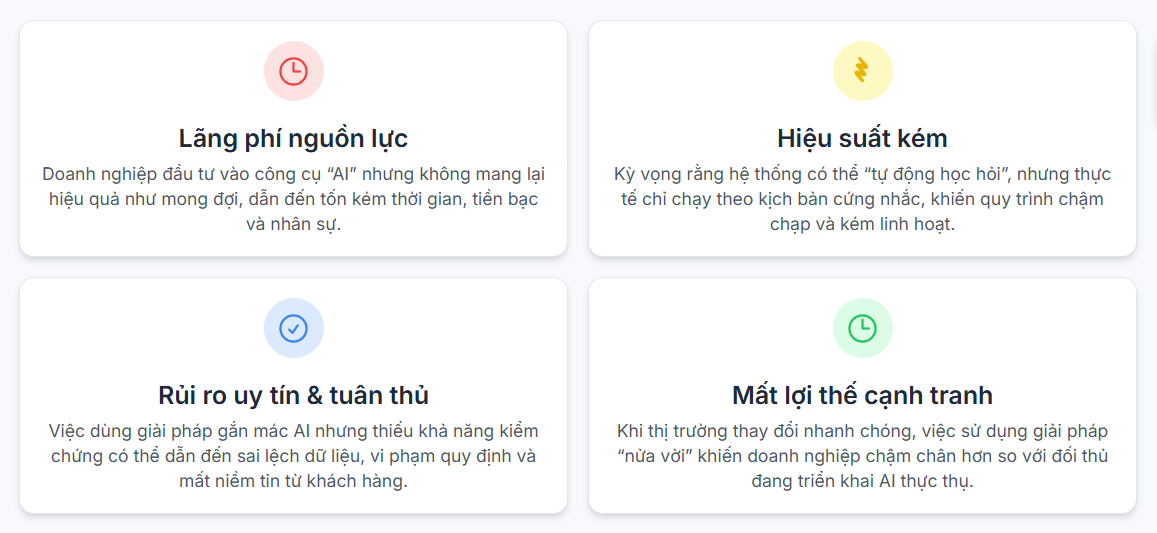
AI Washing có thể gây ra những hậu quả nghiêm trọng cho sự phát triển và uy tín của doanh nghiệp:
Để tránh rơi vào bẫy, doanh nghiệp có thể dựa trên một số câu hỏi kiểm chứng:
AI này hoạt động như thế nào? → Là mô hình học máy, LLM hay chỉ là hệ thống rule-based?
Đầu ra có thể giải trình không? → Có cơ chế log, báo cáo, kiểm tra độ tin cậy (audit trail, confidence score) hay chỉ đưa kết quả mà không rõ quy trình?
Có thực sự giải quyết được vấn đề cụ thể? → Ví dụ: giảm 40% thời gian nhập liệu, cải thiện tốc độ phản hồi khách hàng, tăng hiệu quả phân tích dữ liệu…
Độ minh bạch ra sao? → Nhà cung cấp có sẵn sàng chia sẻ về mô hình, cách xử lý dữ liệu và biện pháp bảo mật không?
Nếu một nhà cung cấp không thể trả lời rõ ràng, đó là dấu hiệu cảnh báo mạnh mẽ.
1. Tập trung vào mục tiêu kinh doanh, không phải “hào nhoáng”
Thay vì chạy theo “AI cho có”, hãy xác định rõ: Doanh nghiệp cần AI để làm gì – tăng tốc xử lý dữ liệu, giảm chi phí vận hành, hay nâng cao trải nghiệm khách hàng?
2. Yêu cầu minh chứng thực tế
Nhà cung cấp cần đưa ra case study, số liệu đo lường hoặc demo cụ thể để chứng minh hiệu quả.
3. Đánh giá khả năng mở rộng và tích hợp
Một giải pháp AI hiệu quả phải dễ dàng tích hợp vào hệ thống hiện có, đồng thời mở rộng khi nhu cầu tăng.
4. Kiểm soát và giám sát liên tục
Doanh nghiệp cần cơ chế theo dõi và kiểm soát đầu ra để đảm bảo AI hoạt động minh bạch, đáng tin cậy và tuân thủ pháp lý.
AI có tiềm năng thay đổi cách doanh nghiệp vận hành, ra quyết định và cạnh tranh. Nhưng để đạt được giá trị thực, doanh nghiệp cần tỉnh táo trước những chiêu trò AI washing, lựa chọn giải pháp dựa trên sự minh bạch, hiệu quả và tính thực tiễn.
Tại CyberTech, chúng tôi cam kết mang đến cho khách hàng giải pháp AI minh bạch, có thể đo lường và chứng minh bằng kết quả thực tế. Chúng tôi đồng hành để giúp doanh nghiệp của bạn khai thác sức mạnh AI một cách an toàn – minh bạch – hiệu quả.
.png)