The DBfication of AI - Bridging the Gap Between Database Systems and Machine LearningMenu
Loading...
Free Consultant 
+84 91 684 9891

The DBfication of AI - Bridging the Gap Between Database Systems and Machine Learning

Published:

22/07/2025
The DBfication of AI - Bridging the Gap Between Database Systems and Machine Learning

Menu:

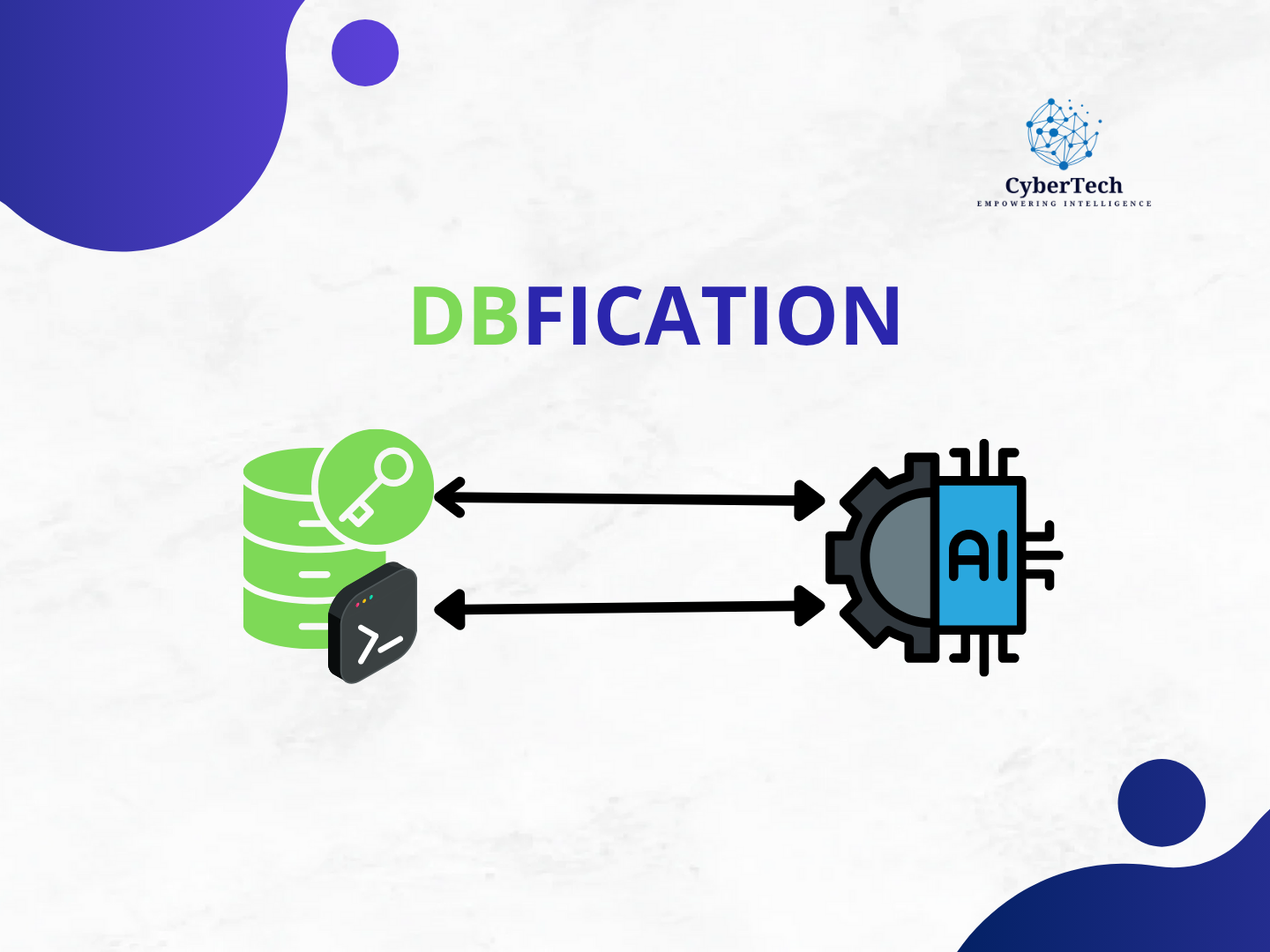
    In the 1980s, writing a simple database query required extensive C++ programming knowledge. Today, the same task takes just one line of SQL. This transformation, which took the database industry 40 years to achieve, now serves as a blueprint for revolutionizing machine learning and artificial intelligence. Professor Arun Kumar from UC San Diego calls this process the "DBfication of ML/AI" – and it could fundamentally change how businesses deploy artificial intelligence.


    From Academic Exercise to Business Imperative

    The machine learning landscape has undergone a seismic shift. "Ten years ago, NeurIPS was primarily a hangout spot for mathematicians and statisticians," Kumar observes. "Now it's 10 to 15 times larger and dominated by big tech companies." This explosive growth reflects a fundamental reality: ML and AI have become ubiquitous business-critical needs, not arcane academic endeavors.

    Yet despite this mainstream adoption, building and deploying ML models remains surprisingly primitive. While database users enjoy sophisticated tools and standardized interfaces, ML practitioners still write low-level Python code, stitch together functions in Jupyter notebooks, and manage complex workflows with scripts. This gap between demand and usability creates what Kumar identifies as pressing problems of both human productivity and system resource efficiency.


    The Three Pillars of ML Transformation

    Kumar's DBfication framework divides the ML application lifecycle into three critical stages, each requiring different database-inspired solutions.


    The Sourcing Stage: Where Data Meets Reality

    The journey from raw data to ML-ready datasets involves acquisition, transformation, preparation, labeling, and cleaning – processes the database community has refined for decades. Project Sorting Hat, one of Kumar's flagship initiatives, tackles a deceptively simple yet critical challenge: automated data preparation for tabular data.

    Consider this common scenario: a company's database stores customer zip codes as integers. When uploaded to an AutoML platform, the system might incorrectly classify these as numeric features rather than categorical ones. "Imagine giving zip code as a numeric feature to logistic regression," Kumar warns. "It could give you garbage results."

    Sorting Hat's benchmarking revealed that many commercial AutoML tools fail at such basic tasks. By creating standardized datasets with over 10,000 annotated columns, Kumar's team demonstrated that simple random forest models could outperform sophisticated commercial tools at feature type inference – a humbling reminder that automation without accuracy offers little value.


    The Building Stage: Scaling the Unscalable

    Project Cerebro addresses the building stage, where models are trained and optimized. The key insight: ML practitioners don't think about training one model at a time. Instead, they explore what Kumar calls the "model selection triple" – tweaking data representations, architectures, and hyperparameters simultaneously.

    Cerebro introduces a middleware layer that separates the "what" of model building from the "how" of execution. Users specify their model search process at a high level, while the system automatically handles resource allocation, parallelization, and optimization. In one public health use case, this approach improved activity prediction accuracy from 75% to 92% while abstracting away complex infrastructure concerns.


    The Deployment Stage: From Lab to Life

    The deployment stage encompasses model integration, monitoring, and maintenance – areas where MLOps intersects with traditional software engineering. Here, database principles around governance, provenance, and workflow management become crucial for production-ready AI systems.


    Learning from Database History

    The parallels between database evolution and ML's current state are striking. Just as ETL (Extract, Transform, Load) processes were initially underappreciated in the database world – leading to innovations like Hadoop and MapReduce – the ML community has similarly underestimated data preparation challenges. The rise of data lakes and data lakehouses in recent years demonstrates how the database industry learned from these oversights.

    Similarly, the emergence of ML platforms like MLflow, TensorFlow Extended, and SageMaker mirrors the evolution of business intelligence tools in the database ecosystem. These platforms are beginning to address end-to-end concerns beyond just model training, incorporating governance, monitoring, and deployment capabilities that database systems have refined over decades.


    The Path Forward: Bridging Two Worlds


    Achieving true DBfication requires unprecedented collaboration between database and ML communities. Kumar advocates for several key initiatives:

    - Standardized Benchmarks: Just as TPC benchmarks shaped the database industry and ImageNet transformed computer vision, the ML data preparation landscape needs standardized task sets and evaluation criteria.

    - Cross-Pollination of Expertise: Database researchers must understand ML workflows, while ML practitioners need to appreciate data management principles. Conferences like VLDB and SIGMOD now feature ML tracks, while ML venues increasingly welcome systems research.

    - Industry-Academia Partnerships: Real-world ML deployment challenges often surface issues invisible in academic settings. Closer collaboration can identify generalizable problems beyond company-specific use cases.


    Conclusion: The Democratization Imperative

    The vision of DBfication is compelling: a future where deploying ML models is as straightforward as writing SQL queries. Where data scientists focus on business problems rather than infrastructure puzzles. Where AI truly becomes democratized across organizations of all sizes.

    As Kumar notes, this transformation won't happen overnight – database systems took four decades to mature. But by applying hard-won database wisdom to ML challenges, we can accelerate this journey significantly. The question isn't whether ML will undergo its own DBfication, but how quickly the community can unite to make it happen.

    For business leaders, the message is clear: the organizations that embrace this database-inspired approach to ML will be best positioned to harness AI's full potential. The DBfication revolution has begun – and it promises to make artificial intelligence as accessible, reliable, and powerful as the database systems that already run the world.

    Loading...

    Tags

    Danh sách tags

    Latest Solutions